English at Dromana Primary School
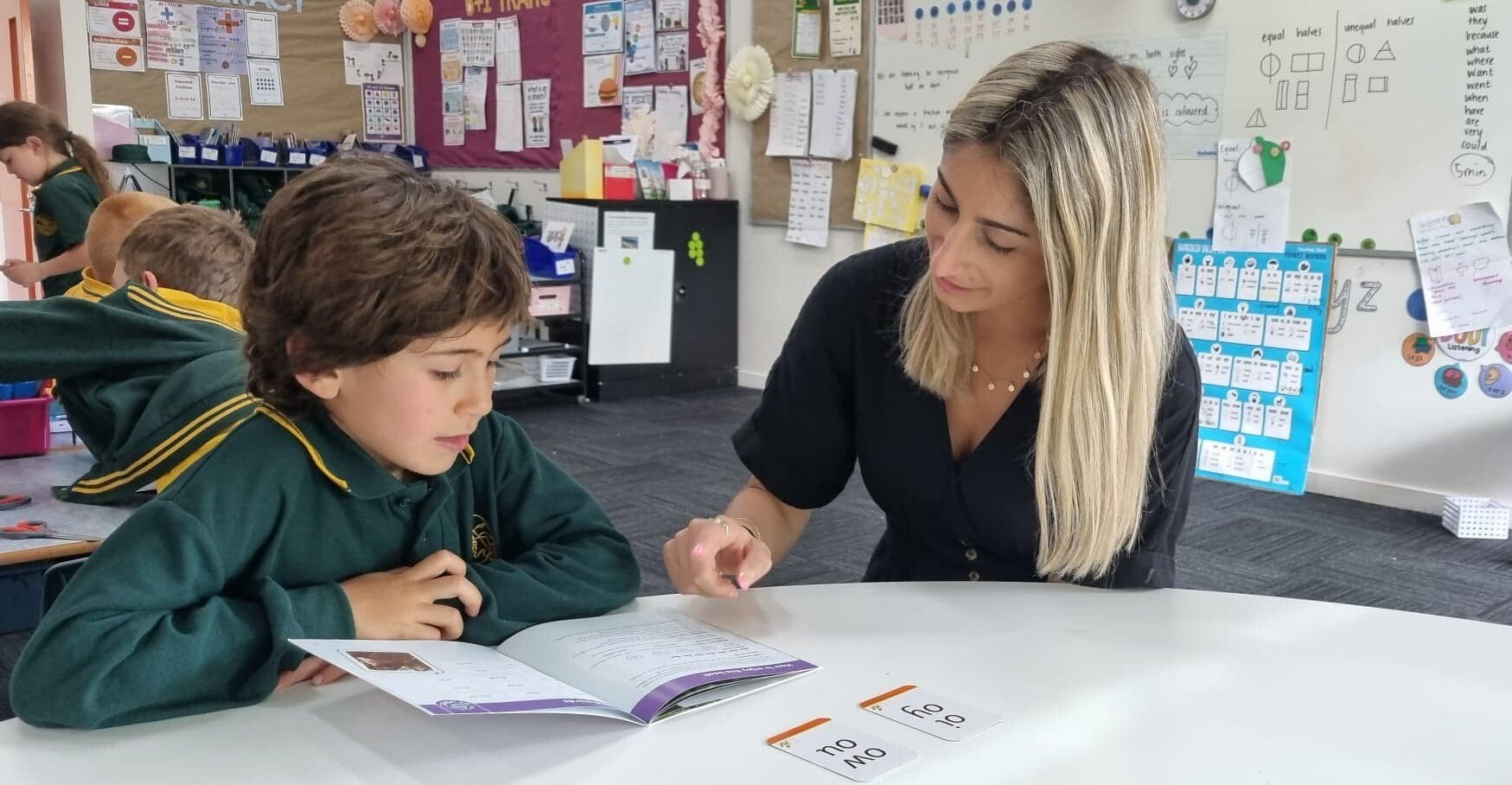
At Dromana Primary School (DPS), we understand how vital strong literacy skills are in supporting success across all areas of learning. Literacy underpins students’ ability to access the curriculum, think critically, communicate effectively and engage confidently with the world.
We use evidence-based approaches to ensure all students succeed and thrive in English. Our teaching is informed by a deep understanding of how the brain learns to read and write, and this knowledge guides the design of our reading and writing programs across the school.
Learning to read is not a natural process like learning to walk or talk. While our brains are naturally wired for oral language, they are not naturally wired to read and write. Reading is a complex, biologically secondary skill that must be explicitly taught. Over the past three decades, cognitive science and neuroscience research has significantly advanced our understanding of what happens in the brain during reading and what instructionally needs to occur to develop skilled readers and writers. At DPS, this research directly informs our classroom practice.
Our approach is grounded in the Science of Reading, ensuring all students develop the literacy knowledge and skills required for long-term academic success. In the early years, the focus is on learning to read with accuracy and fluency. As students progress through the school, the focus shifts to reading to learn, with an increasing emphasis on comprehension, vocabulary and knowledge building.
Reading at DPS
Reading is a multifaceted skill that develops over many years of instruction and practice. Skilled readers demonstrate fluent and automatic word recognition alongside strong text comprehension. As decoding becomes increasingly automatic, students are able to devote more cognitive energy to understanding, analysing and interpreting texts.
As explained by the Simple View of Reading, learning to read requires two overarching abilities:
Decoding (accurately identifying words)
Language comprehension (understanding meaning)
The development of these abilities requires mastery of a number of interrelated skills. Extensive research shows that a high-quality literacy program must explicitly teach six essential components of reading, alongside a strong, knowledge-rich curriculum.
The Literacy Big 6 at DPS
All components of the Literacy Big 6 are explicitly taught, integrated and embedded into daily reading instruction:
Oral Language
The foundation of all literacy skills. Rich oral language experiences build students’ spoken vocabulary, background knowledge and listening comprehension.Phonological & Phonemic Awareness
The ability to hear, identify and manipulate sounds in spoken language. This is a critical foundation for reading and spelling.Phonics
Explicit teaching of letter–sound relationships so students can decode unfamiliar words and encode words when spelling.Fluency
Reading with accuracy, appropriate rate and expression, allowing cognitive capacity to focus on meaning.Vocabulary
Explicit teaching of word meanings and language structures to support comprehension and written expression.Comprehension
Understanding, analysing and responding to text meaning, intent and structure.
‘Literacy Big 6’
Oral Language
Phonological & Phonemic Awareness
Phonics
Fluency
Vocabulary
Comprehension
Our Reading Practices and Programs
At DPS, we incorporate the following evidence-based practices and programs into our reading instruction:
Explicit teaching of phonemic awareness, including short, targeted routines such as one-minute drills
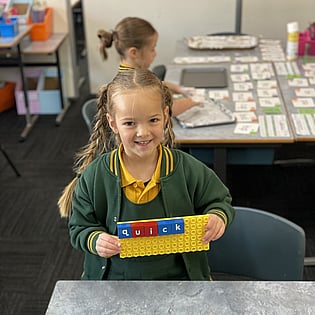
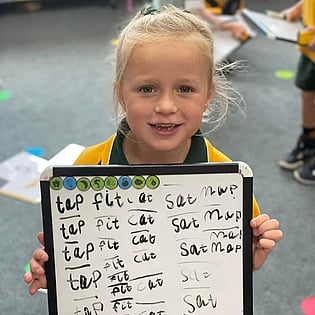
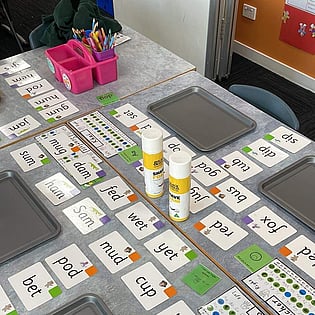
Synthetic, sequential phonics instruction
Little Learners Love Literacy in Foundation to Year Two
The Code in Years Three to Six, as the focus shifts to spelling, morphology and etymology
Automaticity in high-frequency word reading, developed through phoneme–grapheme mapping
Guided fluency practice, aligned with the current phonics or spelling focus
Text-Based Units (Foundation to Year Six) focusing on:
Language structures and verbal reasoning
Reading comprehension strategies
Explicit teaching of Tier 2 vocabulary and literacy knowledge
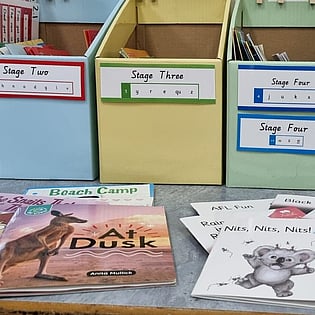
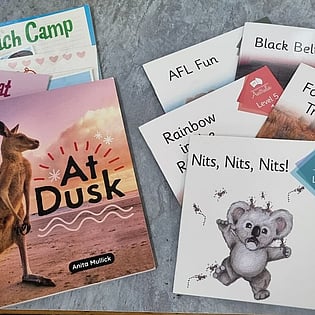
In the early years, students engage in daily phonological and phonemic awareness instruction. Students use decodable texts while learning the reading code so that reading practice aligns precisely with what has been taught. Once decoding becomes fluent and automatic, students transition to a wide range of authentic texts to build comprehension, knowledge and a love of reading.
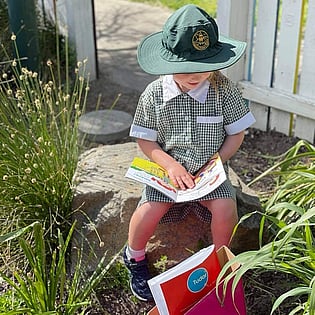
Our classrooms are equipped with well-resourced classroom libraries, and students also have access to a school reading centre where they can borrow books on a fortnightly basis.
Students in Foundation to Year Four have access to Nessy, a structured, sequential synthetic phonics program that supports phonological processing, decoding, encoding, spelling, morphology and orthographic mapping through a motivating, game-based platform.
Writing at DPS
Writing is one of the most complex skills we ask students to master. Effective writing requires students to generate ideas, organise content, apply grammatical knowledge, spell accurately and manage transcription skills — all while maintaining focus on meaning and audience.
At DPS, our writing instruction is informed by The Writing Revolution, which provides an evidence-based framework for explicitly teaching writing across all year levels and curriculum areas.
Sentence-Level Priority
We recognise that sentences are the fundamental building blocks of writing. Sentence-level instruction plays a role in writing similar to the role phonics plays in reading. By prioritising sentence construction, we reduce cognitive load and support students to clearly articulate their ideas. As sentence skills become more automatic, students are able to focus their working memory on content, structure and purpose rather than the mechanics of writing.
Research shows that constructing grammatically complex written sentences requires explicit instruction and sustained practice. Therefore, sentence-level work is deliberately built into all writing instruction as a bridge to paragraph and extended text writing.
The Three Categories of Writing
When planning writing instruction, teachers consider the three interconnected components involved in creating extended texts:
Ideation
Generating ideas drawn from background knowledge, content understanding and vocabularyText Generation
Understanding sentence structure, syntax, vocabulary, genre and text organisationTranscription (Mechanics)
Handwriting, spelling, punctuation and keyboarding skills
All three areas are explicitly taught and developed over time.

Contact Us
Phone: | (03) 5987 2367 | |
Email: | ||
Office Hours: | 8:30am - 4:00pm Mon to Fri |